Local SEO Tips for London Companies to Attract Nearby Customers
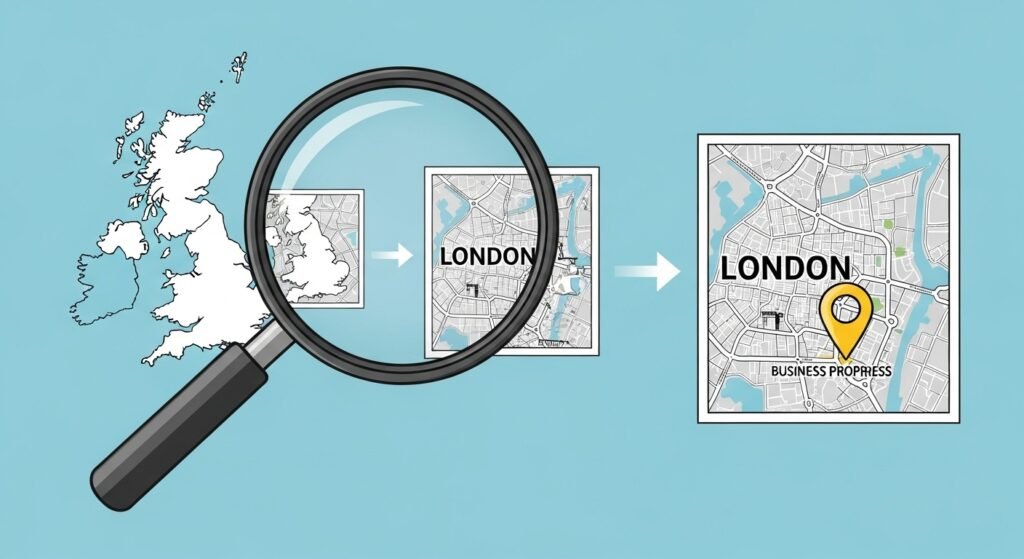
For any London business with a physical presence or a local service area—from a family-run bakery in Brixton to a boutique consultancy in Bank—the digital high street is now more critical than the physical one. Local SEO tips for London aren’t just about being found online; they’re about being found first by the customers on your doorstep who are ready to buy. With over 80% of “near me” searches resulting in a store visit, mastering local search is the most direct route to footfall and phone calls. In a city as densely packed and competitive as London, a generic online presence is invisible. This guide delivers actionable, London-specific strategies to ensure your business dominates local search and consistently attracts nearby customers.
1. Master Your Google Business Profile (GBP): Your Digital Shop Front
Consider your Google Business Profile your single most important local SEO asset. It’s what appears in the Local Pack (the map with three listings) and your Knowledge Panel. Neglect it at your peril.
-
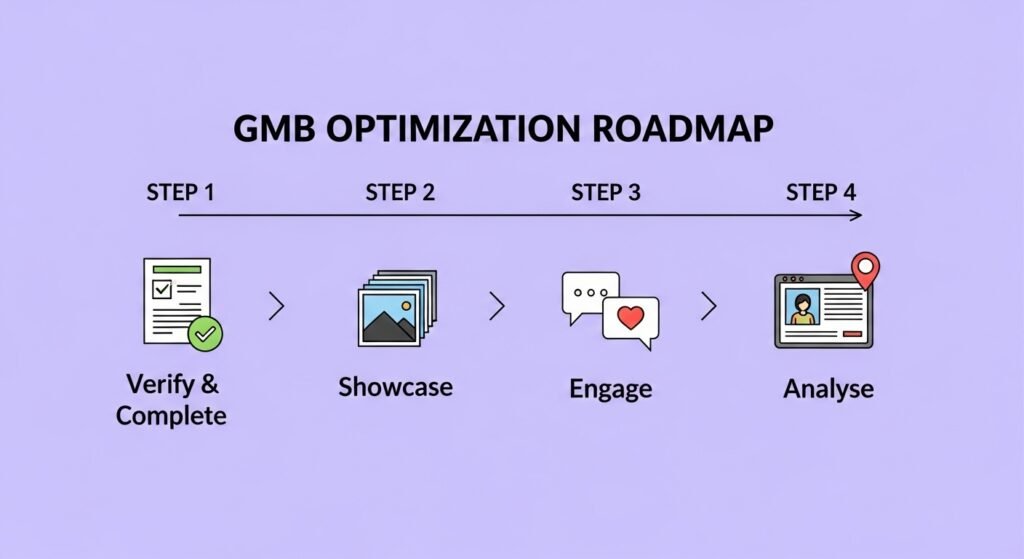
Claim, Verify & Complete It 100%: Ensure every single section is filled out with meticulous accuracy and consistency. This includes:
-
NAP+W: Name, Address, Phone Number, and Website must be identical across the web.
-
Categories: Choose your primary category with precision (e.g., “Italian Restaurant” not just “Restaurant”). Add relevant secondary categories.
-
Description: Craft a keyword-rich, compelling description that clearly states what you do, who you serve, and your unique London locality (mention boroughs or landmarks).
-
Attributes: Select all that apply (e.g., “Women-led,” “Free Wi-Fi,” “Wheelchair accessible”). These are key filters for users.
-
-
London-Specific Optimisation:
-
Service Areas: If you serve clients at their location (e.g., plumbers, therapists), clearly define your service boroughs or postcode districts.
-
Photos & Videos: Upload high-quality, professional images of your premises, team, products, and happy customers. A video tour is powerful. Tag these with London-relevant keywords (e.g., “coffee shop interior Marylebone”).
-
2. Cultivate & Manage Customer Reviews Strategically
Reviews are the social proof that converts searchers into customers. They directly impact local ranking and click-through rates.
-
Proactively Request Reviews: Ask satisfied customers for reviews. Make it easy with a direct link to your GBP review page. Train your team to ask at the point of service.
-
Respond to Every Single Review—Good or Bad: Thank customers for positive reviews. For negative reviews, respond professionally, apologise, and offer to take the conversation offline. This shows you value feedback and are responsive.
-
Encourage Detailed Reviews: Generic “great service” reviews are less powerful than those mentioning specific services, team members, or London location details. These provide rich keyword signals.
-
Embed Reviews on Your Website: Use review snippets (with proper schema markup) to showcase this trust on your own site.
Internal Link Suggestion: Reviews build the “Trust” in E-E-A-T. See how this fits into a broader strategy in our guide on [ranking on Google’s first page in 2026].
3. Build Consistent Local Citations & NAP Listings
A “citation” is any online mention of your business name, address, and phone number. Inconsistency confuses Google and hurts your local ranking.
-
Audit Your NAP: Use tools like BrightLocal to find existing citations and check for inconsistencies. Fix any errors immediately.
-
Focus on Key London & UK Directories: Ensure your information is accurate on:
-
Core Data Providers: Apple Maps, Bing Places.
-
Industry-Specific Directories: e.g., HOUZZ for builders, Treatwell for beauty.
-
London-Focused Directories: London Chamber of Commerce & Industry listings, trusted local community sites.
-
-
Never Keyword-Stuff Your Business Name: Your GBP name must be your real, registered business name. Adding keywords like “London Best Plumber” is a violation of Google’s guidelines and can get you suspended.
4. Create Hyper-Localised Content for Your Community
Your website content should speak directly to the needs and interests of people in your immediate locale.
-
Target Locality + Service Keywords: Instead of just “accountant,” create content around “small business accountant in Clapham” or “tax return help for freelancers in Shoreditch.”
-
Create Location-Specific Pages: If you have multiple London locations or serve several boroughs, create a dedicated, unique page for each area (e.g., “/our-vegan-cafe-islington”).
-
Become a Local Authority: Write blog posts about local events, news, or issues. Sponsor a local sports team and write about it. Interview other local business owners. This demonstrates deep community ties—a strong local ranking signal.
-
Use Local Schema Markup: Implement
LocalBusinessschema on your website to give Google explicit, structured data about your location, opening hours, and services.
External Authority Mention: The official Google Business Profile Help Community is an essential resource for staying updated on guideline changes and best practices directly from Google product experts.
5. Optimise for “Near Me” & Voice Search
Search is becoming more conversational and immediate.
-
Natural Language Keywords: Optimise for phrases people actually say: “emergency plumber near me,” “open now,” “best Italian restaurant Victoria station.”
-
Answer Local Questions: Create FAQ content that answers queries like “Where is the nearest…?” or “What time does [Your Business] open on Sundays?”
-
Ensure Mobile-First Excellence: The vast majority of “near me” searches are on mobile. Your site must load instantly and be easy to navigate on a phone.
6. Track Your Local SEO Performance
You can’t improve what you don’t measure.
-
Google Business Profile Insights: Monitor how customers find your listing (direct searches vs. discovery), where they call from, and what actions they take.
-
Google Analytics 4 (GA4): Set up events to track key local actions: calls from the website, direction requests, and contact form submissions.
-
Track Your Local Rankings: Use tools to monitor your position for key local searches in your target London areas. This shows you what’s working.
The London Local SEO Checklist: 12-Month Action Plan
Quarter 1: Foundation & Clean-Up
-
Fully optimise and verify Google Business Profile.
-
Audit and correct NAP inconsistencies across the web.
-
Begin a structured review generation programme.
-
Ensure website is technically sound and mobile-fast.
Quarter 2: Content & Authority
5. Publish 2-3 pieces of hyper-local content.
6. Build citations on 5-10 key London/industry directories.
7. Implement LocalBusiness schema markup on your site.
Quarter 3: Engagement & Growth
8. Regularly post GBP updates (offers, events, news).
9. Respond to all new reviews within 48 hours.
10. Launch a local link-building campaign (e.g., partner with a nearby charity).
Quarter 4: Refinement & Dominance
11. Analyse performance data and double down on what works.
12. Create local landing pages for top-performing service areas.
FAQ Section
How quickly can I see results from local SEO?
You can see improvements in your GBP visibility within a few weeks of proper optimisation (e.g., better photos, complete info). Moving the needle on local pack rankings typically takes 3-6 months of consistent effort, as Google needs time to verify your signals of relevance and authority.
Do I need a physical shop to benefit from local SEO?
Not necessarily. Service Area Businesses (SABs) like electricians, cleaners, or personal trainers can and must use local SEO. You’ll set a service area in your GBP instead of a precise address. The strategies around reviews, local content, and citations remain critically important.
Are paid Google Ads necessary for local visibility?
While not strictly necessary, Google Local Service Ads (LSAs) or standard PPC with location extensions can provide immediate, top-of-page visibility while your organic local SEO efforts mature. They are highly effective for competitive, high-intent local searches in London.
How important are backlinks for local SEO?
Very important, but the type of backlink matters most. A link from a respected local news site (e.g., MyLondon), a borough council page, or a local industry association is infinitely more valuable than a generic directory link. Focus on earning local, relevant authority.
What’s the biggest local SEO mistake London businesses make?
Inconsistency. Having a slightly different phone number on Yell.com versus your website, or an old address on Facebook, creates “data noise” that undermines Google’s confidence in your legitimacy. A thorough, clean NAP profile is the absolute bedrock.
Start Dominating Your London Neighbourhood
Local SEO is the great leveller for London businesses. It allows the independent shop to compete with the chain store, and the local expert to outrank the distant corporation. By implementing these local SEO tips for London, you’re not just optimising for an algorithm; you’re building a powerful, localised digital presence that turns nearby searchers into loyal, walking-in-the-door customers.
Ready to become the most visible business in your local area? Contact our London-based local SEO specialists today for a free GBP audit and a customised plan to attract more customers from your neighbourhood.