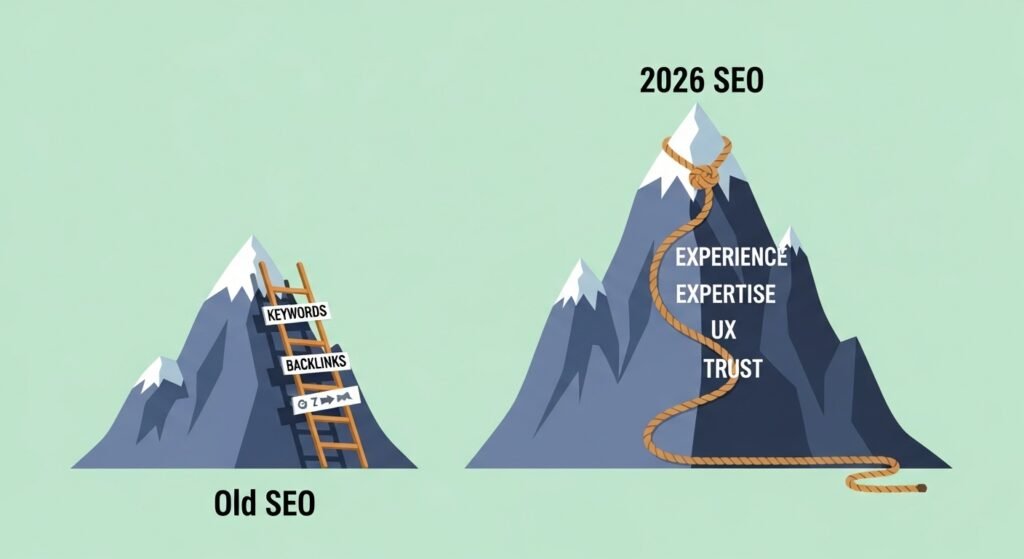
How London Businesses Can Rank on Google’s First Page in 2026: A Future-Proof Strategy
The quest to rank on Google’s first page in 2026 isn’t about chasing a static set of rules; it’s about preparing for an evolution. For London businesses, the digital battleground is intensifying, with AI reshaping search, user expectations soaring, and local competition becoming hyper-intelligent. The core truth remains: appearing at the top of SERPs (Search Engine Results Pages) is the single greatest driver of qualified traffic and growth. However, the path to get there is shifting. This guide isn’t a crystal ball, but a strategic forecast built on current trajectories and expert insight, designed to help London SMEs build a resilient, future-proof SEO foundation that will dominate not just today, but in the landscape of 2026.
The 2026 SEO Pillars: What Won’t Change & What Will Evolve
The fundamentals of value, relevance, and authority will remain, but their expression will deepen. To rank first page Google 2026, you must master these evolving pillars:
1. E-E-A-T: From Principle to Imperative
Google’s E-E-A-T (Experience, Expertise, Authoritativeness, Trustworthiness) will move from a quality guideline to the dominant ranking signal, especially for YMYL (Your Money, Your Life) businesses—which, in a post-pandemic world, includes most professional services in London.
-
What to Focus on Now for 2026:
-
Demonstrate Experience: Google will increasingly favour content created from real-world, hands-on experience. For a London architect, this means detailed case studies with client testimonials, project data, and challenges overcome in the London planning system, not just theoretical design articles.
-
Prove Expertise with Depth: Surface-level content will fail. Develop definitive, research-backed guides. Partner with recognised UK institutions, cite recent OFCOM or ONS data relevant to your sector, and showcase team qualifications.
-
Build Authoritativeness in London’s Ecosystem: Earn links and mentions from London-centric authoritative sources—local business associations (e.g., London Chamber of Commerce), respected .gov.uk sites, and reputable London media.
-
Establish Trustworthiness Transparently: Clearly display client reviews (using structured data), accreditations, physical London address, and transparent pricing. Privacy policies and data security will be paramount for trust signals.
-
Internal Link Suggestion: Building authority starts with a strong local foundation. Revisit our guide on [local SEO for London SMEs] for core tactics.
2. User Experience (UX) as a Direct Ranking Factor
Page Experience signals (Core Web Vitals) are just the beginning. By 2026, Google’s ability to measure holistic UX—through interaction data, dwell time, and satisfaction—will be vastly more sophisticated.
-
What to Focus on Now for 2026:
-
Page Speed & Mobile-First is Non-Negotiable: Your site must be blisteringly fast on a mobile device on a busy London street. Invest in superior hosting, advanced caching, and optimized images.
-
Intent-First Design: Don’t just answer a query; solve the user’s complete problem instantly. For “best digital marketing agency London,” the top result will likely be an immersive, interactive experience—a quiz, a configurator, or an instantly loaded comparison tool—not just a static service page.
-
Accessibility as Standard: Sites built to WCAG 2.1 AA standards will rank better. It’s both an ethical imperative and a signal of professional, user-centric development.
-
Maximise “Page Value”: Reduce intrusive pop-ups and ensure content is immediately accessible. Google will measure “frustration” signals like rapid back-clicks.
-
3. The AI-Content Equilibrium: Augmentation, Not Automation
The rise of AI-generated content has created noise. By 2026, Google will be exceptional at identifying human insight, unique perspective, and real-world value. AI will be a powerful assistant for research and ideation, but human expertise will be the differentiator.
-
What to Focus on Now for 2026:
-
Create “Un-commoditisable” Content: Focus on content that requires human experience: original research on the London market, in-depth interviews with local industry leaders, detailed case studies with proprietary data.
-
Leverage AI Strategically: Use AI to analyse search trends across London, generate content briefs, or summarise data. But the final output must be edited, fact-checked, and infused with your unique brand voice and London-specific insight.
-
Embrace Multi-Format “Content Clusters”: A pillar page on “Sustainable Office Fit-Outs in London” should be supported by video walkthroughs of past projects, podcasts with sustainability experts, and interactive carbon calculators. This demonstrates depth and caters to all user preferences.
-
External Authority Mention: Google’s own Search Generative Experience (SGE) and evolving Search Quality Rater Guidelines continually emphasise the critical importance of people-first content created for humans, which will only intensify.
4. Hyper-Local & Visual/Verbal Search Dominance
For London businesses, “near me” will evolve into “show me.” Search will become more contextual, visual, and conversational.
-
What to Focus on Now for 2026:
-
Optimise for Visual Search: Ensure high-quality, well-lit images and videos of your London premises, products, and team. Use descriptive file names and alt text. Consider creating 360° virtual tours.
-
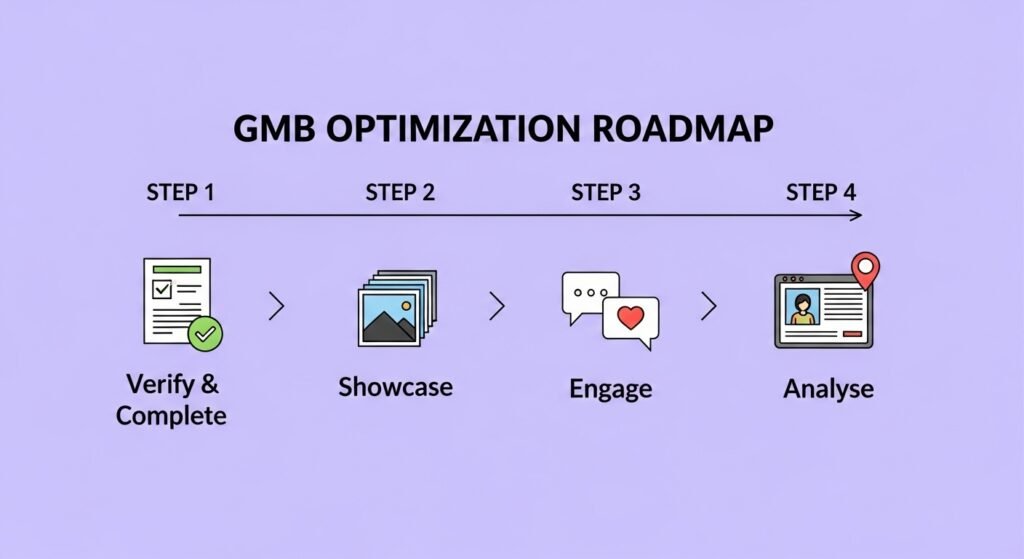
Dominate Local Business Profiles: Your GBP will become a full-fledged mini-website. Regularly post updates, offers, and events. Utilise Q&A, product listings, and booking features. Integrate reviews from other platforms.
-
Prepare for Voice & Conversational Search: Optimise for natural language questions. Create FAQ content that answers “how,” “why,” and “which is best for…” queries a Londoner might ask aloud. Schema markup (especially for local business) will be critical.
-
A Tactical Action Plan for London Businesses (2024-2026)
Phase 1: The Foundation Audit (Now – End of 2024)
-
Conduct a full technical SEO audit focusing on Core Web Vitals.
-
Audit all content against E-E-A-T principles. Identify and rewrite or remove thin content.
-
Fully optimise and activate every feature of your Google Business Profile.
-
Begin building a repository of original data, client case studies, and expert testimonials.
Phase 2: Authority & Experience Build (2025)
-
Launch a proprietary research project (e.g., “The 2025 London SME Digital Sentiment Report”) to earn media links and establish thought leadership.
-
Overhaul key service pages into immersive, interactive experiences that clearly demonstrate your process and expertise.
-
Implement advanced schema markup (FAQ, How-To, Local Business) on all key pages.
-
Develop a sustainable content plan focused on multi-format “content clusters” around your core services.
Phase 3: Refinement & AI-Integration (2026)
-
Utilise AI tools to personalise user journeys on-site based on inferred intent from search query and location data.
-
Double down on visual and video content optimised for emerging visual search interfaces.
-
Continuously monitor and adapt to Google’s SGE integration, ensuring your content is structured to be featured in AI-powered overviews.
FAQ Section
Will backlinks still matter in 2026?
Yes, but their quality will matter infinitely more than quantity. One authoritative backlink from a respected UK institution like a .gov.uk site or major industry body will be worth more than 1000 low-quality directory links. The context of the link (as an endorsement of expertise) will be heavily weighted.
Is technical SEO still important for 2026?
More than ever. Technical SEO is the foundation that allows all other elements (great content, UX) to be recognised and ranked. A slow, poorly structured site cannot rank highly, regardless of content quality, because it fails the user experience test.
How much should I budget for this future-proof SEO strategy?
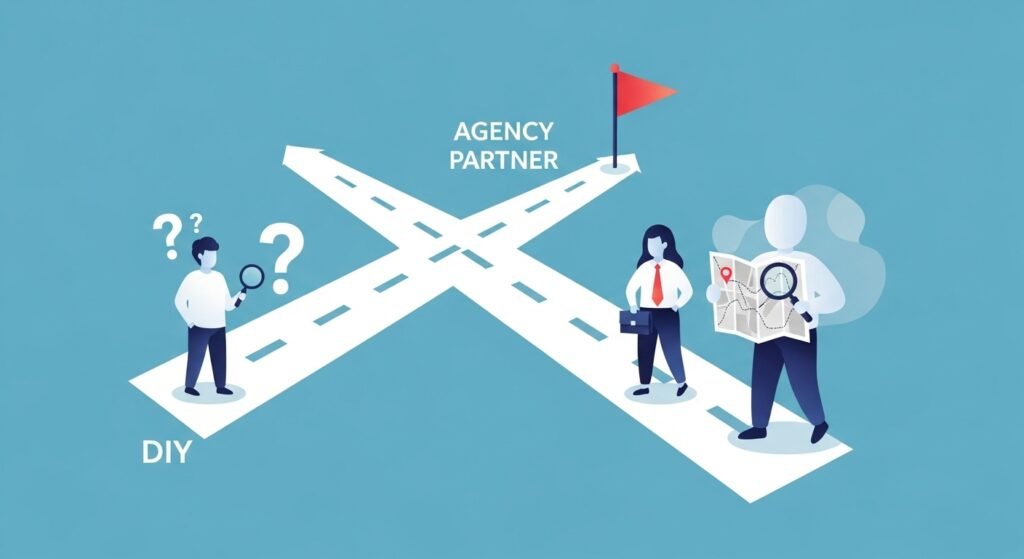
SEO is a long-term investment. For a London SME, a sustained monthly investment of £1,500-£3,000 for specialist agency support (covering technical, content, and local SEO) is realistic to compete. This is significantly more efficient than the cost of multiple in-house hires.
Can a very small local business (like a café) compete?
Absolutely. For hyper-local businesses, the 2026 landscape favours those who master their Google Business Profile, collect genuine reviews, post regular local updates, and create simple but authentic visual content (photos of dishes, the team). E-E-A-T is demonstrated through local reputation and consistency.
What’s the single biggest risk to my rankings by 2026?
Complacency. Relying on a website and strategy built for 2022. The businesses that will win are those that start adapting now—investing in site experience, shifting their content model to emphasise expertise, and treating their local profile as a primary digital asset.
Start Building Your 2026 Search Presence Today
The future of search in London is intelligent, experiential, and fiercely competitive. The time to adapt is not when the 2026 algorithm updates roll out; it’s now. By proactively aligning your strategy with the pillars of E-E-A-T, unparalleled user experience, human-centric content, and hyper-local visibility, you won’t just be trying to rank on Google’s first page in 2026—you’ll be architecting a durable online authority that drives growth for years to come.
Don’t wait for the future to disrupt you. Let’s future-proof your London business’s search presence. Schedule a comprehensive 2026-readiness SEO audit with our London-based specialists today.